Scumbag Barbers 💈
Schorem
BarberNieuwe Binnenweg 104, 3015 BD Rotterdam, Netherlands
Rating breakdown
Sign in to rate this place.
Place data ©Google
In short · AI summary
Discover the world of vintage barbering at Schorem, where classic cuts and subcultures collide. Learn about the founders, the unique aesthetic, and the global impact of this iconic Rotterdam barbershop.
Scumbag Barbers 💈
Walk down Nieuwe Binnenweg in Rotterdam on any given morning, and you’ll spot it long before you see the hand-painted gold lettering on the window pane: a line of men stretching around the block, patiently standing in the drizzle.
There are no online booking apps here. No minimalist white tiles. Zero ring lights, and precisely zero interest in whatever soft, textured crop is currently trending on social media.
Welcome to Schorem Haarsnijder en Barbier—the shop that single-handedly ignited the global vintage barbering renaissance.
Born from Subculture & "Riff-Raff"
The word Schorem roughly translates from Dutch to "scumbags," "riff-raff," or "bad seeds."
Founded in 2011 by Leen Bergmann and Bertus Rietveld—two heavily inked barbers steeped in rockabilly, psychobilly, and punk subcultures—Schorem was built as an anti-salon sanctuary. It was designed from day one to bridge the gap between traditional working-class grooming and alternative tattoo culture.
Step through the doors, and you’re instantly wrapped in a high-contrast time capsule:
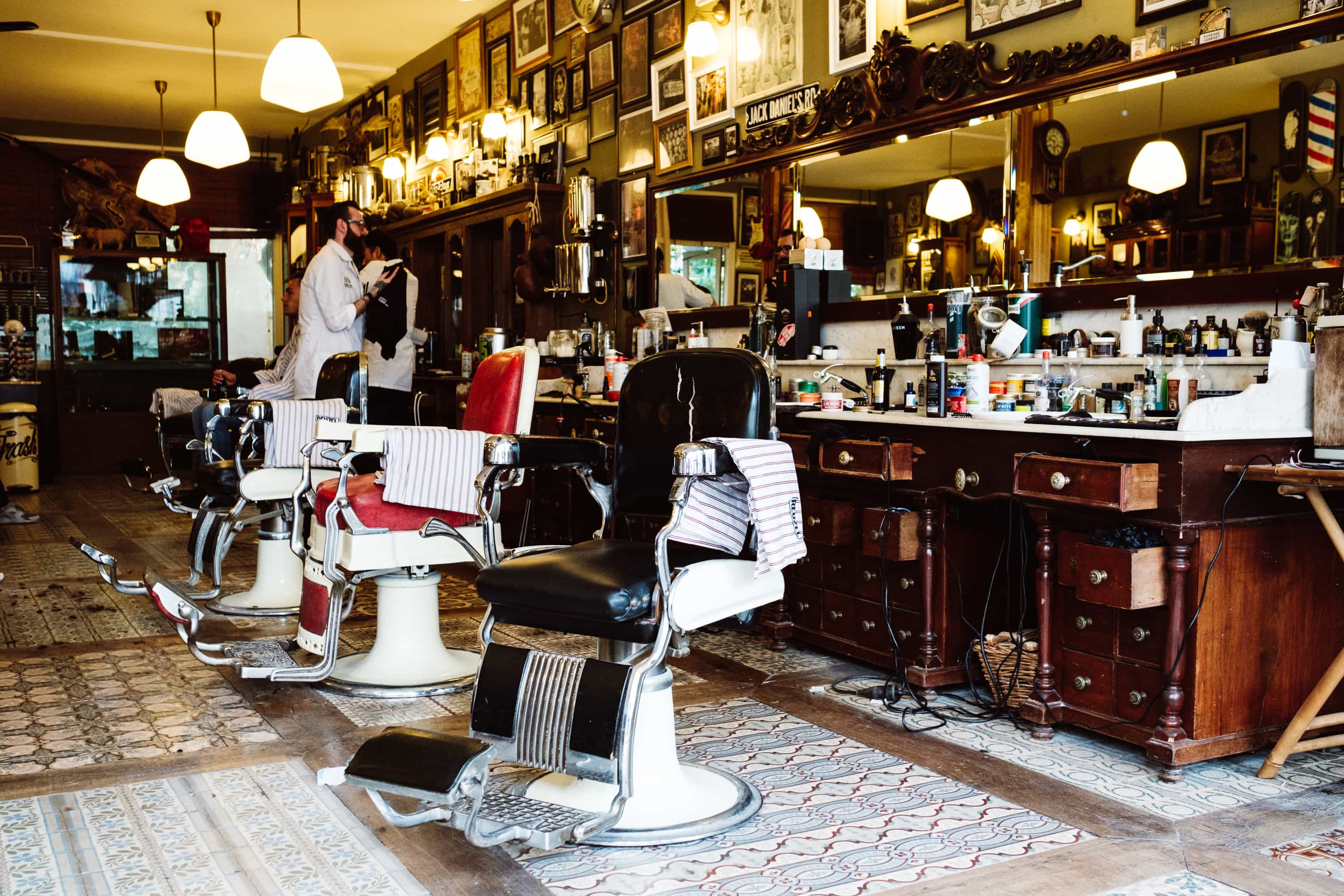
Floor-to-Ceiling Flash Art: Walls completely covered with classic Sailor Jerry-style framed tattoo flash—anchors, daggers, panthers, and pin-ups—interspersed with taxidermy and antique straight razors.
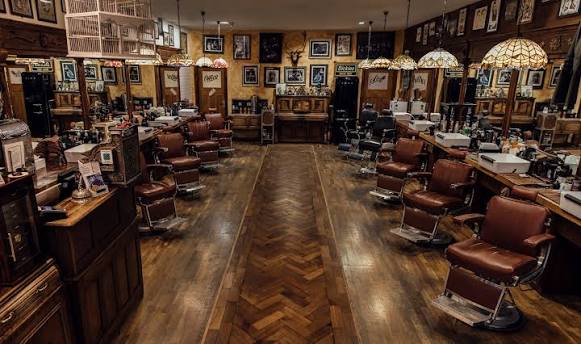
Heavy Iron & Leather: Restored 19th-century Belmont barbershop chairs facing distressed dark-wood workstations.
Raw Soundtrack: Loud rockabilly, outlaw country, punk, and blues spinning continuously over the hum of clippers and the popping of beer caps.
"If It’s Not on the Wall, You’re Not Getting It"
Schorem built its international reputation on a legendary, uncompromising rule: classic cuts only.
If you ask for a trendy modern style, you'll be politely shown the door. Instead, clients are directed to point to a poster on the shop wall featuring 12 classic 1920s–1950s styles:
The Poster Menu
The Executive Scumbag: A razor-sharp side part paired with a tight skin fade.
The Classic Pompadour: High volume, slicked back, contoured precision.
The Psychobilly Quiff: Extreme height, sharp angles, and serious hold.
The Flattop & Ducktail: Pure geometric hand-sculpting using shear-over-comb techniques.
Traditional Cut-Throat Shaves: Open-blade shaves with steaming hot towels and classic alcohol-based aftershaves.
"We don't do fashion. Fashion is for people who don't know who they are. Style is knowing who you are and sticking to it."
— Bertus Rietveld
The Legacy: Reuzel & The Old School
What began as a neighborhood haunt for greasers, bikers, and rockers quickly became a global pilgrimage destination for both clients and barbers worldwide.
1. Reuzel Pomade
To achieve the gravity-defying height and high shine required for classic pompadours without relying on modern water-based gels, Leen and Bertus created their own product line: Reuzel (Dutch for "lard," honoring 18th-century animal-fat pomade origins). Today, its distressed metal tins featuring a boar silhouette are stocked in top-tier barbershops globally.
2. The Old School Barber Academy
Directly across the street sits The Old School Barber Academy, where aspiring barbers fly in from every corner of the world to master scissor discipline, blade handling, and the timeless ethos behind tattoo-inspired barber culture.
Why the Aesthetic Struck a Chord
Schorem proved that getting a haircut could be more than a mundane errand—it could be a subcultural home. By grounding their craft in traditional tattoo art, heritage skills, and unapologetic attitude, they transformed a single Rotterdam storefront into a worldwide movement.